

Fine natural hairs represent a highly sought‑after and delicate category of natural materials, used mainly in cosmetics, professional fine‑art brushes, and high‑quality shaving brushes. They are complex materials to select: each type of hair must meet very specific requirements in terms of softness, elasticity, colour, ability to retain or NOT retain liquids, and behaviour during use.
In recent years, many of these natural materials have been progressively replaced by fine synthetic filaments, which offer greater availability, lower costs, and increasingly high performance. However, natural fine hairs remain irreplaceable in certain professional applications, where the feel, softness, and response of natural hair cannot be matched. Despite continuous progress in synthetic materials, to this day it has not been possible to artificially replicate the behaviour of some natural hairs, although research is steadily advancing to get closer to their original characteristics.
For this reason, it is essential to rely on experienced industry professionals, capable of selecting the correct materials and guiding manufacturers toward the most suitable choices for their production needs.
With increasing concerns about plastics causing environmental damage it’s another important factor to note that natural hair is 100% bio-degradable and sustainable
Below is an overview of the main fine hairs traditionally used.
⭐ Badger Hair
Badger hair is one of the most prestigious materials used in shaving brushes. Common lengths include 48, 51, 54, 57, 60, 65, 70, 75, 80, and 90 mm.
Badger hair is classified into several quality grades (I, II, III, IV), including the Super grade, commercially known as “Silver”. Generally, the whiter the tip of the hair, the more valuable the material. However, caution is essential: sometimes the white tip is obtained through chemical bleaching, a process that makes the hair more fragile, causing the tips to break more easily compared to natural, untreated badger hair.
Badger hair is appreciated for:
-
its ability to retain water and soap
-
the softness of the tip
-
the resilience of the shaft
-
its capacity to produce a rich and uniform lather
For decades, it has been the reference material for professional shaving brushes. In recent years, its high cost has led many manufacturers to replace it with premium synthetic filaments, although no synthetic has managed to replicate the beauty of a natural badger hair shaving brush.
⭐ Goat Hair (Capra Hircus)
Origin: China; Scientific name: Capra Hircus
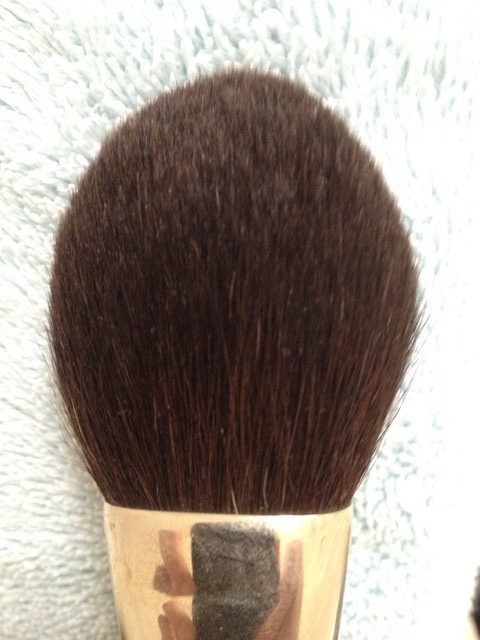
Goat hair is widely used in the cosmetics industry thanks to its softness and natural colour. It is available in white, black, brown, and grey shades, with lengths ranging from 44 mm to 70 mm and beyond.
Characteristics The fibre is cylindrical and wavy along its entire length, giving brushes a soft and even touch. It is available in several grades (SZF, HJF, BJF, DGF, SGF, Penbrush) and colours: natural black, brown or black dyed, white, and grey. This structure allows the creation of voluminous, gentle brushes that feel pleasant on the skin and provide smooth, diffused applications.
Use Goat hair is mainly used for high‑quality cosmetic brushes, including powder, blush, and highlighter brushes. It is also used for watercolour mops or mixed with pony hair for school‑grade watercolour brushes. White and grey varieties are often used in imitation badger mixtures.
Ideal for:
-
Powder brushes
-
Blush brushes
-
Highlighter brushes
-
Soft and diffused applications
Lengths available: 44 – 70 mm and longer (extended lengths are increasingly rare).
Price range:
-
Chinese dressed: $6 – $265/kg depending on grade and length
-
European dressed: variable according to processing and selection
Technical notes Thanks to its natural wave, goat hair offers an excellent balance between softness and resilience. It retains powders and pigments evenly, ensuring precise and controlled application. Higher grades (SZF, HJF) are used for professional make‑up and watercolour brushes, while more economical grades are suitable for school or technical mixtures.
⭐ Pony Hair (Horse‑Body Hair)
Scientific name: Equus Caballus
Origin: China
Pony hair is used in cosmetics and in the production of fine‑art brushes, including many school‑grade brushes. It is available in two main types: Chinese pony hair and European‑reprocessed pony hair, the latter offering a more accurate selection and higher consistency.
Characteristics The fibre is cylindrical and does not form a sharp point. It is soft yet strong, with a dull, matte appearance. Only the dark brown variety is used for artist brushes. Pony hair combines flexibility with firmness, making it suitable for even product application and smooth blending.
Use It is mainly employed for school‑grade watercolour brushes and lacquer touch‑up brushes, as well as for cosmetic brushes such as eyeshadow and blending brushes. Pony hair is often mixed with squirrel hair to reduce costs while maintaining softness and elasticity.
Lengths available: 25 – 54 mm and longer (some selections reach up to 60 mm).
Price range:
-
Chinese dressed: $17 – $65/kg (depending on length)
-
European dressed: around $155/kg
Appreciated for:
-
Natural softness
-
Good elasticity
-
Uniform product application
Pony hair remains a versatile and reliable material for both artistic and cosmetic applications, valued for its balance between softness and strength.
⭐Ox Ear Hair (Bos Taurus)
Scientific name: Bos Taurus
Origin: China
Ox ear hair is a strong and resilient natural fibre widely used in the production of high‑quality flat brushes. Its cylindrical structure does not taper to a fine point but provides a firm body with a silky texture and excellent snap, allowing the brush to retain its shape and return quickly after each stroke.
Characteristics
This type of hair combines strength and flexibility, making it ideal for brushes that require durability and controlled movement. It is available in several colours, including light tan, dark brown, black, and sable imitation (sabeline). Its natural sheen and elasticity give brushes a balanced feel and consistent performance.
Use
Ox ear hair is mainly used for flat brushes intended for oil painting and other techniques that require firmness and precision. It is often blended with other types of hair to improve the brush’s resiliency and spring, enhancing its ability to hold and release paint evenly.
Lengths Available
From 29 mm to 83 mm and longer.
Price Range
Chinese dressed: 35 – 50 USD/kg
English dressed: 100 – 650 USD/kg
Appreciated For
- strong and resilient body
- silky texture and smooth application
- excellent snap and shape retention
Ox ear hair remains a valued material for professional brush makers thanks to its combination of strength, elasticity, and refined texture, ensuring long‑lasting performance in artistic and technical applications.
⭐Squirrel Tail Hair (Sciurus Vulgaris)
Scientific name: Sciurus Vulgaris
Origin: Northeastern China, Siberia
Squirrel hair, sourced from the tail of the animal, is one of the softest natural hairs available. It is highly valued for its exceptional absorbency and delicate texture. Lengths range from 29 to 70 mm and beyond.
Characteristics
The fibre is conic‑shaped, with thick bellies and fine points. It has very little snap — meaning it is not highly resilient — but it is extremely absorbent, making it ideal for liquid applications. Available types include blue squirrel, brown (Kazan), Canadian, and pine squirrel.
Use
Squirrel hair is suitable for liquid paints, inks, and dyes. It is widely used for watercolour brushes, wash brushes, watercolour mops, and cosmetic brushes requiring exceptional softness and precision.
Ideal for
- extremely soft blending
- delicate applications
- precision artistic brushes
- high‑softness cosmetic brushes
Lengths Available
From 29 mm to 70 mm and longer.
Price Range
Chinese dressed: Blue/Brown: $310/kg Pine: $260/kg Canadian: $1,800/kg
English dressed: Blue/Brown: $620/kg
Appreciated For
- extreme softness and absorbency
- fine conic shape and smooth transitions
- delicate response for precision work
Its natural elasticity makes squirrel hair perfect for smooth transitions and fine detail work. Despite its limited resilience, it remains one of the most sought‑after materials for professional watercolour and cosmetic brushes, where softness and fluid control are essential.
⭐Weasel Tail Hair (Red Sable)
Scientific name: Mustela Nivales
Origin: China
Weasel hair, commercially known as Red Sable or simply Weasel, is the most affordable alternative to Kolinsky sable. Although less expensive, it retains good elasticity and softness, making it an excellent balance between quality and price.
Characteristics
The colour is darker than Kolinsky, with reddish‑brown tones. The fibre is conic‑shaped, featuring points and bellies similar to Kolinsky hair. It is used for medium‑ and low‑priced sable brushes, offering reliable performance and precision.
Use
Weasel hair is employed for fine art brushes, watercolour brushes, oil painting brushes, and cosmetic brushes. Thanks to its elasticity and fine tip, it is ideal for detailed work and smooth blending.
Lengths Available
From 25 mm to 54 mm and longer.
Appreciated For
- good elasticity and softness
- precise tips and well‑formed bellies
- excellent value for money
Weasel hair remains a versatile and dependable choice for both artistic and cosmetic brushes, offering balanced performance and pleasant softness at a more accessible cost compared to Kolinsky sable.
⭐Kolinsky Tail Hair (Sable Hair)
Scientific name: Mustela Siberica
Origin: Northeastern China, Siberia
Kolinsky, known in Italian as martora, is considered the most refined and expensive of all fine hairs. It comes from the tail of the animal and is available in lengths from 25 to 54 mm. The colour is golden brown, and it represents the best conic‑shaped hair available for professional brush making.
Characteristics
Kolinsky hair features very fine long points and thick bellies. Despite its softness, it is highly resilient and can pick up and spread even the thickest paint with precision. Hair from male animals is generally longer and stronger than that from females, offering superior performance and durability.
Use
It is the reference material for professional fine‑art brushes, watercolour brushes, precision detail brushes, and high‑end cosmetic brushes. Its extremely fine tip, ability to retain water, and controlled elasticity make it a unique material, still unmatched in professional painting.
Lengths Available
From 25 mm to 54 mm and longer.
Appreciated For
- exceptional softness and resilience
- fine conic shape and precise tip
- excellent water retention and elasticity
- unmatched quality for professional use
Kolinsky hair remains the gold standard for high‑end artistic and cosmetic brushes, combining elegance, precision, and durability in every stroke.
⭐ Raccoon Hair
Raccoon hair, commercially known as Raccoon, comes from the tail of the animal. It is mainly used in cosmetics, appreciated for its natural softness and its ability to blend powder products gently. Its structure allows the creation of soft cosmetic brushes with good elasticity, ideal for light and uniform applications.